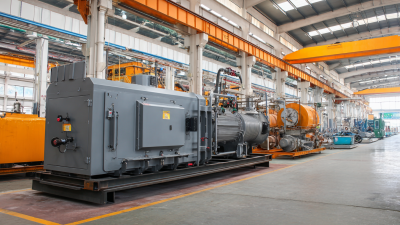
Explosion-proof circulation heaters are increasingly a must-have in places like refineries, chemical plants, and gas processing facilities — you know, those really hazardous industrial environments. Basically, these heaters work by pushing a controlled fluid through an electric-heating chamber, helping keep temperatures steady in pipelines, reactors, tanks, and sampling systems. Even a small enclosure isn’t immune — vapor, dust, or gas risks still come into play. That detail? It really matters.
According to the International Energy Agency’s Energy Technology Perspectives 2024, pushing for more industrial electrification is a key step toward cutting emissions. But here’s the thing: no matter how efficient your energy use is, it doesn’t replace the need for proper hazard protections in risky zones. Standards like NFPA 70 and IEC 60079 emphasize the importance of carefully considering where equipment is placed, how it’s protected from sparks, wiring, and how it’s maintained. So, before you even look at wattage or price tags, make sure the equipment has the right certifications. You might find a heater that’s perfect for your process, but if it doesn’t meet your site’s requirements, it’s useless.
Paul Amyotte, a well-respected process safety researcher, sums it up nicely: “Process safety has to be built into the equipment from the get-go, not just checked after the fact.” That’s a key idea behind our review of the Top 10 Explosion Proof Circulation Heaters for global buyers. We look at factors like thermal output, pressure ratings, control accuracy, materials used, ease of service, and certification proof. Brands like Chromalox, Watlow, Exheat, and Process Technology all bring different strengths to the table. Nothing’s perfect, though. Some share tons of technical info online, while others leave you digging to find the right installation details. That’s something to watch out for. Ultimately, choosing the right heater depends on your fluid properties, flow rates, ambient conditions, hazardous zone classification, and local approval rules. We’ve put together a practical comparison, but remember — always double-check those specs directly with the manufacturer and consult a qualified safety expert before making any decisions.
Explosion-proof circulation heaters are designed to warm liquids or gases safely in hazardous industrial areas. Their main purpose is controlled heat transfer, not flame production. The heater sits outside the main process stream, while a pump moves the medium through a heated chamber.
A typical unit includes a pressure-rated vessel, electric heating elements, terminal housing, temperature sensors, insulation, and mounting supports. The enclosure helps prevent internal sparks from igniting surrounding vapors. However, the label alone is not enough. Buyers should check certification, temperature class, pressure rating, fluid compatibility, and local installation requirements.
The operating principle is straightforward. Cold fluid enters the vessel, passes over the heating elements, and leaves at a controlled temperature. A sensor sends readings to the control system. The system adjusts power or stops heating when limits are reached. Independent cutoffs can respond to overheating, low flow, or sensor failure.
Flow matters greatly.
Poor circulation can create hot spots, damage seals, or shorten element life. In field applications, engineers should confirm pump capacity, start-up conditions, and expected viscosity changes. A heater may perform well during testing but struggle in winter or under reduced flow. That gap deserves attention. Regular inspection of terminals, sensors, insulation, and process connections improves reliability and reveals small faults before they become expensive failures.
When selecting among the top ten explosion proof circulation heaters, global buyers should verify certification before comparing wattage or delivery time. IEC 60079 standards address equipment design, testing, and protection methods for explosive atmospheres. The IECEx scheme supports international certification, while ATEX requirements apply to equipment placed on the European Union market. North American projects may follow NEC and NFPA requirements for hazardous locations.
Check the heater’s marking carefully. It should identify the protection method, gas or dust group, temperature class, ambient range, and applicable zone or division. A heater rated for Zone 1 may not suit every Division 1 installation without additional approval. This detail is often missed. It should not be.
Practical assessment matters too. Review enclosure ingress protection, terminal design, surface temperature control, and resistance to vibration or corrosion. Ask for current certificates, test reports, installation instructions, and traceable serial numbers. Confirm that the heater matches the process fluid, flow rate, pressure, and available voltage. In field use, poor cable glands and incorrect grounding can undermine otherwise compliant equipment. Independent inspection before commissioning is wise, even when documents appear complete. Requirements can change by country, project owner, and installation environment, so local engineers should validate the final selection.
A technology-based buyer reference ranked by application flexibility, hazardous-area coverage, maintainability, and international compliance potential.
| Rank | Circulation Heater Configuration | Typical Industrial Applications | Common Heating Mediums | Typical Hazardous-Area Use | Typical Temperature Capability | Key Construction and Safety Features | Common Global Compliance Routes | Important Buyer Checks |
|---|---|---|---|---|---|---|---|---|
| 1 | Flanged In-Line Circulation Heater | Process heating, chemical production, refineries, gas treatment, and thermal-fluid systems | Air, nitrogen, water, glycol, oil, and process gases | Zone 1/2Class I Div. 1/2 | Commonly engineered for process outlet temperatures from approximately 50°C to 400°C; final limits depend on materials and design | Flanged removable bundle, welded pressure vessel, grounded metal enclosure, independent temperature control, and high-limit protection | IEC 60079, IECEx, ATEX/EN IEC 60079, UL 1203, NFPA 70, and CSA requirements as applicable | Confirm design pressure, flow rate, fluid compatibility, flange standard, area classification, and required temperature class |
| 2 | Screw-Plug Circulation Heater | Skid-mounted equipment, compact process lines, hydraulic systems, and packaged gas systems | Water, glycol, hydraulic oil, lubricating oil, and clean gases | Zone 1/2Class I Div. 1/2 | Often designed for outlet temperatures from approximately 40°C to 300°C, subject to watt density and fluid properties | Compact threaded bundle, low installation footprint, sealed terminal enclosure, thermowell, and over-temperature cut-out | IEC 60079, IECEx, ATEX, UKEX, UL 1203, and CSA C22.2 requirements where applicable | Check thread or flange connection, minimum flow, pressure rating, heater watt density, and service access |
| 3 | Gas Circulation Heater | Natural-gas conditioning, instrument-air heating, fuel-gas systems, nitrogen purging, and vaporization support | Natural gas, hydrogen-containing gas mixtures, nitrogen, air, and process gases | Zone 1/2Class I Div. 1/2 | Frequently engineered for gas outlet temperatures from approximately 50°C to 250°C, depending on flow, pressure, and gas composition | Low-surface-temperature design, pressure-rated vessel, temperature sensors, flow interlock, and sealed hazardous-location terminal box | IEC 60079, IECEx, ATEX, NFPA 70, UL 1203, and national pressure-equipment rules as applicable | Evaluate gas group, hydrogen risk, minimum flow, pressure drop, maximum surface temperature, and relief protection |
| 4 | Thermal-Oil Circulation Heater | Polymer processing, chemical reactors, heat-transfer loops, drying systems, and industrial ovens | Mineral-based thermal oil and synthetic heat-transfer fluids | Zone 1/2Class I Div. 1/2 | Commonly engineered for circulating-fluid temperatures from approximately 100°C to 350°C; oil manufacturer limits must be observed | Reduced watt density, expansion-tank integration, dual temperature monitoring, flow switch, and high-limit shutdown | IEC 60079, IECEx, ATEX/UKEX, UL 1203, and applicable electrical installation codes | Verify fluid film temperature, auto-ignition data, flow velocity, expansion volume, pump interlock, and cleaning requirements |
| 5 | Water and Glycol Circulation Heater | Tank farms, fire-protection support systems, freeze protection, process-water skids, and wash-down systems | Water, ethylene glycol mixtures, and propylene glycol mixtures | Zone 2Class I Div. 2 | Commonly used for fluid temperatures from approximately 5°C to 150°C | Corrosion-resistant wetted parts, low watt density, dry-fire protection, thermostat, high-limit cut-out, and bonded enclosure | IEC 60079, IECEx, ATEX, UL 1203, NFPA 70, and CSA requirements as applicable | Confirm glycol concentration, electrical conductivity, freeze point, flow assurance, corrosion resistance, and enclosure ingress protection |
| 6 | High-Pressure Process Circulation Heater | Hydrogen systems, chemical injection, gas compression, supercritical processes, and high-pressure test rigs | Pressurized gases, water, oils, and specialty process fluids | Zone 1/2Class I Div. 1/2 | Temperature range is highly application-specific; many systems are engineered for approximately 50°C to 300°C | Pressure-vessel engineering, certified weld procedures, rupture or relief protection, redundant temperature sensing, and robust terminal sealing | IEC 60079, IECEx, ATEX/UKEX, ASME pressure-vessel rules where required, UL 1203, and local codes | Check maximum allowable working pressure, cyclic duty, pressure relief, material compatibility, testing documentation, and leakage risk |
| 7 | Steam and Condensate Circulation Heater | Steam tracing support, condensate recovery, process preheating, and utility skids | Water, condensate, and treated utility fluids | Zone 2Class I Div. 2 | Typically designed for approximately 40°C to 180°C, depending on pressure and steam-system conditions | Drainable vessel, condensate management, low-level protection, high-limit cut-out, and corrosion-resistant heating elements | IEC 60079, IECEx, ATEX, UL 1203, NFPA 70, and applicable pressure-system regulations | Assess water chemistry, condensate drainage, steam pressure, thermal cycling, heater orientation, and access for inspection |
| 8 | Sanitary or Hygienic Circulation Heater | Food, beverage, pharmaceutical, biotechnology, and clean-process utilities located near hazardous areas | Water, purified water, cleaning solutions, and selected process fluids | Zone 2Class I Div. 2 | Commonly engineered for approximately 20°C to 150°C | Polished wetted surfaces, hygienic connections, drainable geometry, low crevice design, temperature control, and sealed electrical enclosure | IEC 60079, IECEx, ATEX/UKEX, UL 1203, and applicable hygienic design requirements | Verify cleanability, surface finish, elastomer compatibility, hygienic connection standard, drainage, and hazardous-area boundary |
| 9 | Low-Temperature Freeze-Protection Circulation Heater | Outdoor piping, storage vessels, emergency systems, chemical lines, and cold-climate installations | Water, glycol, dilute chemicals, and low-viscosity process fluids | Zone 2Class I Div. 2 | Usually designed to maintain fluids between approximately 5°C and 80°C | Low-output control, ambient-temperature compensation, freeze thermostat, circulation interlock, and weather-resistant hazardous-area enclosure | IEC 60079, IECEx, ATEX, UL 1203, NFPA 70, CSA, and regional environmental requirements | Confirm minimum ambient temperature, insulation quality, standby power, fluid freezing point, and control-panel location |
| 10 | Custom Multi-Zone Circulation Heater Skid | Large process plants, modular packages, offshore platforms, LNG facilities, and integrated utility systems | Gases, water, glycol, oils, and specialized process fluids | Zone 1/2Class I Div. 1/2 | Project-specific; commonly engineered from low-temperature maintenance duty to approximately 400°C process duty | Independent heating circuits, redundant sensors, PLC or DCS interface, flow and pressure interlocks, emergency shutdown, and certified cable entries | IEC 60079, IECEx, ATEX/UKEX, UL 1203, NFPA 70, CSA, AS/NZS 60079, and local project specifications | Require a complete hazardous-area dossier covering equipment category, EPL, gas group, temperature class, IP rating, cable glands, and inspection schedule |
Top 10 Explosion Proof Circulation Heaters for Global Buyers
How to Evaluate Heating Capacity, Materials, and Temperature Control
Heating capacity should match the actual process, not only the catalog rating. Measure flow rate, inlet temperature, target temperature, fluid density, and expected heat loss. A useful field calculation includes startup time and winter ambient conditions. Many buyers overlook piping losses. That mistake can produce slow heating and unstable operation. Leave reasonable capacity margin, but avoid excessive power that may damage sensitive fluids.
Material selection depends on chemistry, pressure, and cleaning methods. Stainless steel suits many water-based applications, while stronger alloys may be needed for corrosive fluids or repeated thermal cycling. Check the heater sheath, chamber, seals, fittings, and sensor well together. One weak material can limit the entire system. Request material certificates and verify compatibility with the real fluid, not a simplified specification sheet.
Temperature control requires more than a single adjustable dial. Look for a calibrated sensor, reliable proportional control, and an independent high-temperature limit. Sensor placement matters. A sensor near the outlet may react differently from one inside the heater chamber. During commissioning, record outlet temperature at several flow rates and compare it with the controller display. Small errors matter. I have seen correct calculations fail because sensors were installed too close to heat sources. Review the test data honestly, and treat unexplained temperature swings as a design issue rather than normal behavior.
Comparative benchmark of representative heater configurations by rated heating capacity and maximum operating temperature. Material selection and temperature-control accuracy are shown in the chart tooltips to support global purchasing evaluations.
Higher capacity supports greater flow rates, while stainless steel and nickel-alloy wetted parts are typically preferred for corrosive or high-temperature fluids. Temperature-control accuracy depends on sensor placement, controller design, and process conditions.
Top 10 Explosion Proof Circulation Heaters and Their Distinctive Features
Process heating deserves careful equipment selection. The U.S. Department of Energy reports that process heating uses about 51% of industrial energy. Explosion-proof circulation heaters can reduce heat loss when fluids move through controlled chambers. The ten practical types below suit different duties.
A horizontal shell-and-tube heater offers easy inspection and steady flow. A vertical inline model saves floor space in compact plants. A skid-mounted unit simplifies installation beside pumps and filters. A flange-mounted heater supports quick element replacement. A threaded heater fits smaller piping systems. A dual-circuit heater provides staged control and backup capacity. A high-pressure model uses reinforced vessels and monitored seals. A low-flow design limits overheating during startup. A modular heater allows capacity changes without rebuilding the whole system. A heat-transfer-fluid heater delivers stable temperatures for viscous liquids.
IEC 60079 guidance emphasizes certified equipment, temperature control, and ignition-risk management. The U.S. National Fire Protection Association also stresses correct classification and maintenance in hazardous areas. Technical reports often forecast continued demand for efficient industrial heating, but market estimates differ by region and application. That uncertainty matters. A heater rated for gas service may not suit combustible dust. Field checks should confirm flow rate, fluid chemistry, enclosure rating, cable entry, and shutdown response. Small details matter. One selection mistake can create uneven heating, wasted power, or difficult maintenance.
For global buyers comparing the top ten explosion-proof circulation heaters, application data should guide the decision. Hazardous area classification matters. So do gas group, temperature class, operating pressure, and required flow rate. A suitable heater needs certified protection for its location, not merely a strong metal enclosure. Regional approval requirements can also differ, so documentation must be checked before purchase.
In practice, inspect the heating chamber, flange design, electrical connections, and control system. Materials should resist the process fluid and expected corrosion. Accurate temperature sensors help prevent overheating and protect sensitive fluids. A reliable design may include independent high-limit protection, low-flow shutdown, and clear maintenance access. Keep the wiring practical. Crowded terminals create avoidable service problems.
A heater can look perfect on paper yet perform poorly after installation. I have seen specifications overlook viscosity changes during cold starts. That mistake affects circulation and heat transfer. Buyers should request performance data at real operating conditions, including minimum flow and maximum pressure. Certification records, factory testing, spare-part support, and installation guidance also deserve attention. No single model suits every hazardous process. A careful review with qualified engineers is still necessary, especially when local regulations, site classification, or fluid behavior remains uncertain.
Explosion Proof Circulation Heaters: Installation, Maintenance, and Safe Operation
Installing an explosion proof circulation heater demands more than matching voltage and pipe size. Confirm the hazardous-area classification, temperature class, pressure rating, and local electrical requirements before delivery. A qualified technician should verify the heater’s enclosure, grounding path, cable glands, and process connections. Small details matter. Keep adequate clearance around terminals and inspection covers. Incorrect orientation can trap air, reduce flow, and damage heating elements.
During commissioning, check fluid compatibility, circulation rate, pressure limits, and every safety interlock. The heater should not energize without confirmed flow. Test high-temperature cutouts and emergency isolation controls under controlled conditions. Record readings, wiring changes, and inspection dates. These records support reliable maintenance and make troubleshooting less dependent on memory.
Maintenance should follow the manufacturer’s approved procedure and the site’s lockout process. Isolate electrical power, release pressure, and allow hot surfaces to cool before opening the enclosure. Inspect seals, terminals, sensors, and element surfaces for moisture, corrosion, looseness, or residue. Clean carefully. Do not bypass a failed control. A common mistake is assuming a stable temperature proves safe operation; restricted flow may remain hidden until failure. Recheck connections after vibration, seasonal temperature changes, or process modifications. Even experienced teams can miss a small leak or loose gland, so independent inspection is worth the extra minutes.
Tubular heaters for air-duct systems provide a practical method for raising air temperature in ventilation, make-up air, and process-heating applications. The U.S. Energy Information Administration’s 2018 Commercial Buildings Energy Consumption Survey identifies space heating as the largest single end use, accounting for roughly one-third of commercial-building energy consumption. This makes efficient heat transfer and accurate temperature control important factors in duct-heater design.
Finned tubular air-heating elements are built like standard tubular elements, with continuous spiral fins permanently furnace-brazed to the sheath at approximately 4–5 fins per inch. These fins substantially increase surface area, allowing heat to transfer to moving air more quickly while reducing the element’s surface temperature at a given output. Lower surface temperature can help limit hot spots, support longer element life, and reduce the risk of damaging nearby duct materials. ASHRAE guidance emphasizes matching heater capacity and airflow to the required temperature rise, rather than selecting wattage alone.
Selection should begin with airflow, entering-air temperature, desired discharge temperature, available voltage, and required heating capacity. In imperial units, sensible air-heating capacity can be estimated with Q ≈ 1.08 × CFM × ΔT, where Q is in Btu/h. Designers should also verify air velocity, pressure drop, element spacing, sheath material, over-temperature protection, airflow proving, and staged or proportional controls. For corrosive or humid environments, material compatibility and enclosure protection deserve additional review.
It heats liquids or gases in hazardous industrial areas. A pump moves the medium through a heated chamber. No flame is produced.
Common parts include a pressure-rated vessel, electric elements, sensors, insulation, supports, and a terminal housing. Each part affects safe operation.
Cold fluid enters the vessel and passes over the heating elements. A sensor measures temperature, while the controller adjusts power or stops heating.
Weak circulation can create hot spots near the heating elements. It may damage seals and shorten element life. Flow matters greatly.
Check certification, temperature class, pressure rating, fluid compatibility, voltage, flow rate, and local installation rules. Do not trust the label alone.
Measure flow rate, inlet temperature, target temperature, fluid density, and heat loss. Include startup time and cold winter conditions. Piping losses are easy to miss.
Stainless steel suits many water-based fluids. Corrosive fluids may require stronger alloys. Check the chamber, sheath, seals, fittings, and sensor well together.
Use a calibrated sensor, proportional control, and an independent high-temperature cutoff. Sensor placement matters. A nearby heat source can distort readings.
Review certificates, test reports, cable glands, grounding, terminals, sensors, and process connections. Independent inspection is wise. Documents can still hide problems.
Inspect terminals, sensors, insulation, seals, and connections regularly. Compare displayed temperature with outlet readings at different flow rates. Small errors matter.
This guide introduces Explosion Proof Circulation Heaters, explaining their construction, heating elements, protective enclosures, circulation paths, and operating principles in hazardous industrial environments. It reviews the major safety considerations and certification requirements that global buyers should examine, while emphasizing the importance of matching equipment to the applicable regional standards. The article also explains how to assess heating capacity, process fluid compatibility, material selection, temperature control accuracy, pressure ratings, and energy efficiency.
A practical comparison of the top 10 Explosion Proof Circulation Heaters highlights differences in configuration, control features, durability, installation flexibility, and suitability for various industrial processes. The guide concludes with advice on selecting the right unit for a specific application, including environmental conditions, required temperature range, flow rate, and available power supply. It also outlines essential installation, inspection, maintenance, and safe-operation practices to support reliable performance and reduce operational risks.